
CCTV Camera Installation in Toronto & the GTA
CCTV camera installation in Toronto and the GTA from GTA Security Camera Pros covers small storefronts, detached homes and mixed-use properties, with the focus on usable footage, solid coverage, and dependable recording. Every quote starts with a free site visit, so the camera count, cable route, and recorder are based on the building rather than a boxed kit.
What's included
- Site survey of entries, light, and cable paths
- IP (PoE) or analog HD camera systems
- Fixed and varifocal lens selection
- NVR or DVR recording sized to your retention goal
- Upgrades that reuse compatible coax or network cable
- Owner-controlled mobile and desktop viewing
What it costs
| Job | Price range | Typical |
|---|---|---|
| 8-camera commercial system, supplied and installedMost land around $5,000 to $6,000 | $3,000 to $9,000 | Most land around $5,000 to $6,000 |
| 16-camera commercial system, supplied and installedMost land around $12,000 | $8,000 to $17,000 | Most land around $12,000 |
| Installing cameras you already boughtMounting, connection and setup | About $250 per camera | Mounting, connection and setup |
Prices in Canadian dollars. What moves the number: camera count, cable length, ceiling height and lift work, finished versus open ceilings, the brand you pick and how many days of recording you want. The site visit is free and the quote is in writing.
Recent commercial jobs
Commercial strip plaza, Brampton (property manager) · 12 HD IP cameras
Analog to IP on a Brampton strip plaza, plus an outdoor PA system
Old coax out, fresh Cat6 across the complex, 12 HD IP cameras on the lot and back alleys, PA horns for property alerts. Two days.
How we did itWarehouse and logistics hub, Vaughan · About 800 ft of Cat6, inside and out
Closing a blind spot in a Vaughan distribution bay in one day
High-value stock kept going missing from one bay. 800 ft of new Cat6 and 4K turrets with person detection, about 6 hours on site.
How we did itWhat the site survey records
Before recommending equipment, we walk the property and note what each camera must show: the door a person uses, the till, the loading door, the driveway, or the side passage. For each view we record mounting height and surface, the distance to the subject, light at night, backlight from glass doors or headlights, and anything that blocks the view. We also trace where cable can travel back to the recorder and where the recorder, switch, and power will live. That survey is what the quote is built from, and it is why two properties with the same number of cameras can be priced differently.
IP cameras or analog HD: choosing the system type
Most new CCTV installs use IP cameras: each camera connects over network cable to a PoE switch or network video recorder (NVR) that supplies power and records the stream. Analog HD systems send video over coaxial cable to a DVR. Analog HD can make sense when good coax is already in place and the goal is a lower-disruption upgrade; IP is usually the better fit for new cable, higher resolutions, flexible camera features, and future expansion. Some recorders accept both, which can let an older site move to IP in stages. We explain which parts of an existing system can be kept before recommending a replacement.
Match the lens and resolution to the job of each camera
A camera that shows a whole parking lot will not identify a face at the far end of it. The international CCTV performance standard IEC 62676-4 describes this as pixel density on the subject: roughly 25 pixels per metre to detect movement, 62 to observe, 125 to recognise a known person, and 250 to identify an unknown one. In practice that means a wide fixed lens for overview scenes and a tighter or varifocal lens for doors, tills, and gates. Higher resolution helps only when the lens, light, and mounting distance also support the detail you need.
Cable, power, and network limits we plan around
Copper Ethernet is designed for channels of up to 100 metres, so long runs to a gate, yard, or far end of a warehouse may need an intermediate switch, an extender, or fibre. PoE switches have a total power budget: standard IEEE 802.3af ports supply up to 15.4 watts and 802.3at ports up to 30 watts, while pan-tilt-zoom cameras, heaters, and some infrared models need more. Outdoor runs need cable rated for the location, sealed connections, and protected entry points. These limits are checked during the survey so the system is not undersized on installation day.
Recording, retention, and getting footage out
How long a recorder keeps footage depends on camera count, resolution, frame rate, compression, whether it records continuously or on motion, how busy each scene is, and the installed drive capacity. We size the recorder around the retention period you choose rather than quoting a fixed number of days from drive size alone. At handoff we set the date and time, name each channel, test playback, and export a sample clip so the responsible person knows how to retrieve evidence before an incident happens.
Privacy decisions belong in the CCTV plan
For businesses, the Office of the Privacy Commissioner of Canada advises defining why surveillance is needed, considering less intrusive options, limiting each camera to the area required, posting notice, securing recordings, restricting who can view them, and deleting footage when it is no longer needed. For homes, cameras should focus on your own property and avoid neighbouring windows and yards; privacy masking can block areas a camera would otherwise see. Audio recording raises separate legal questions and stays off unless the owner has a specific lawful reason. The owner makes those policy decisions; we set up the angles, masks, accounts, and permissions to match them.
Official planning references
From our jobs
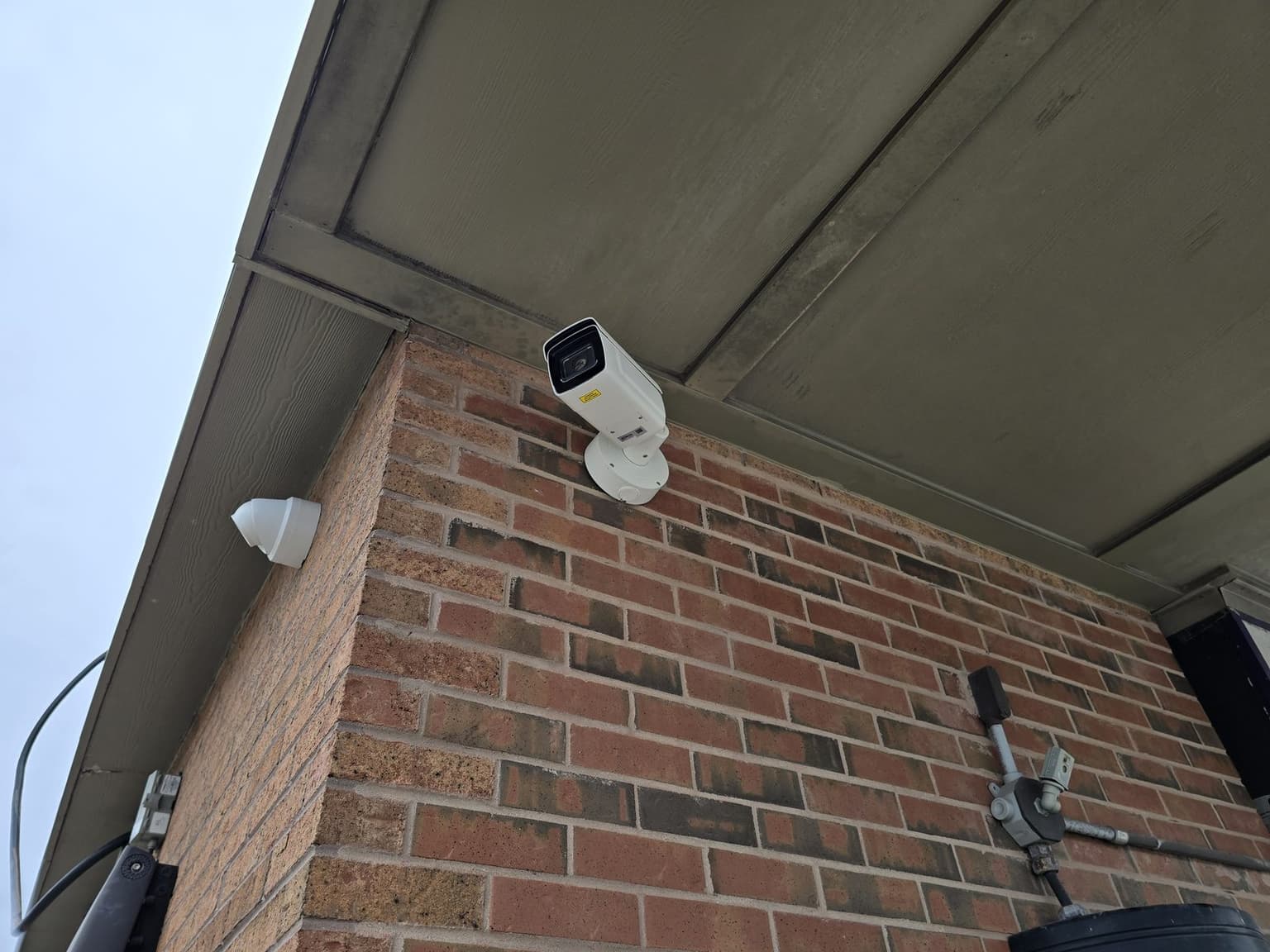
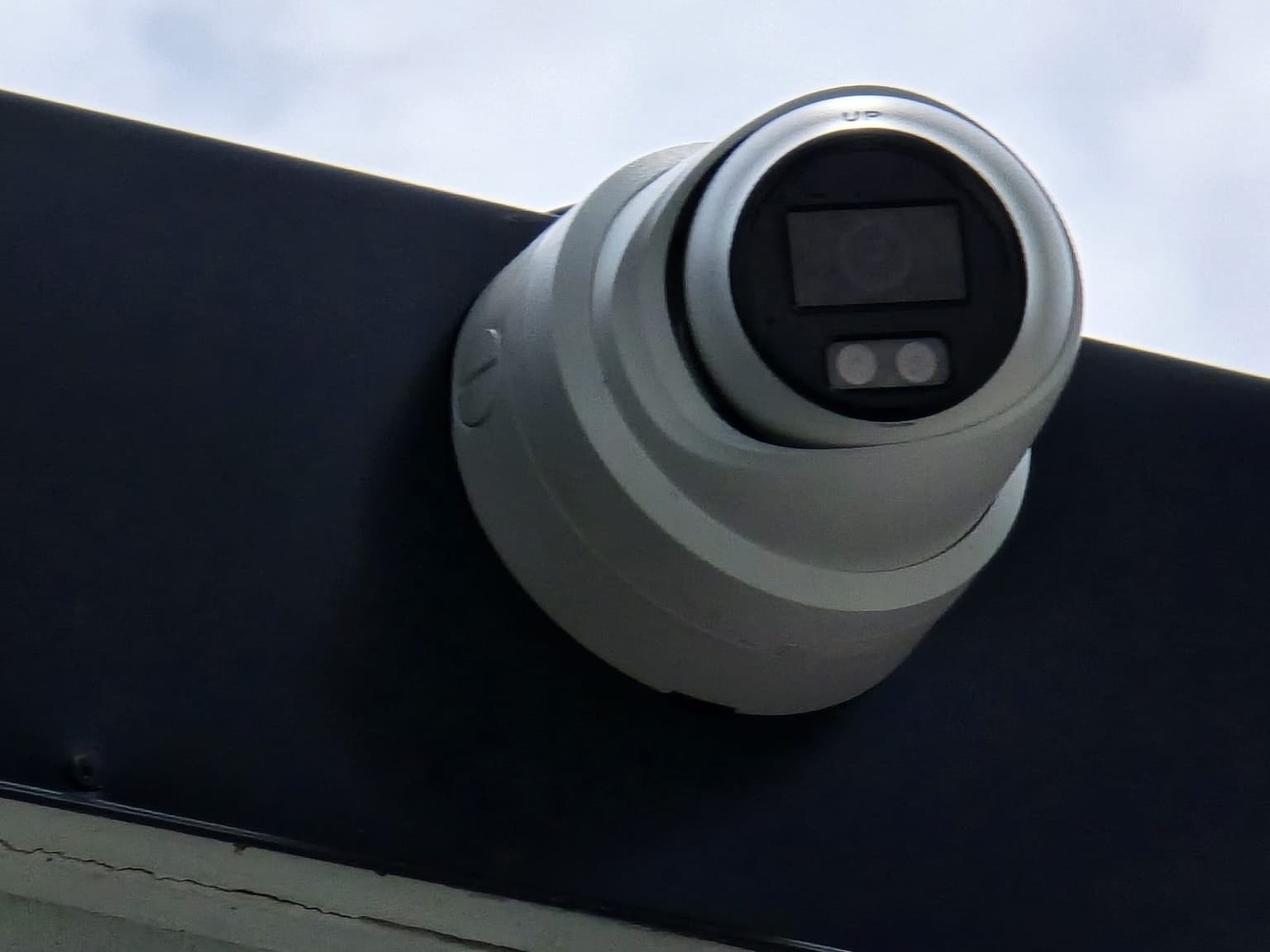
Corner of a plaza unit: bullet down the side, turret on the lot 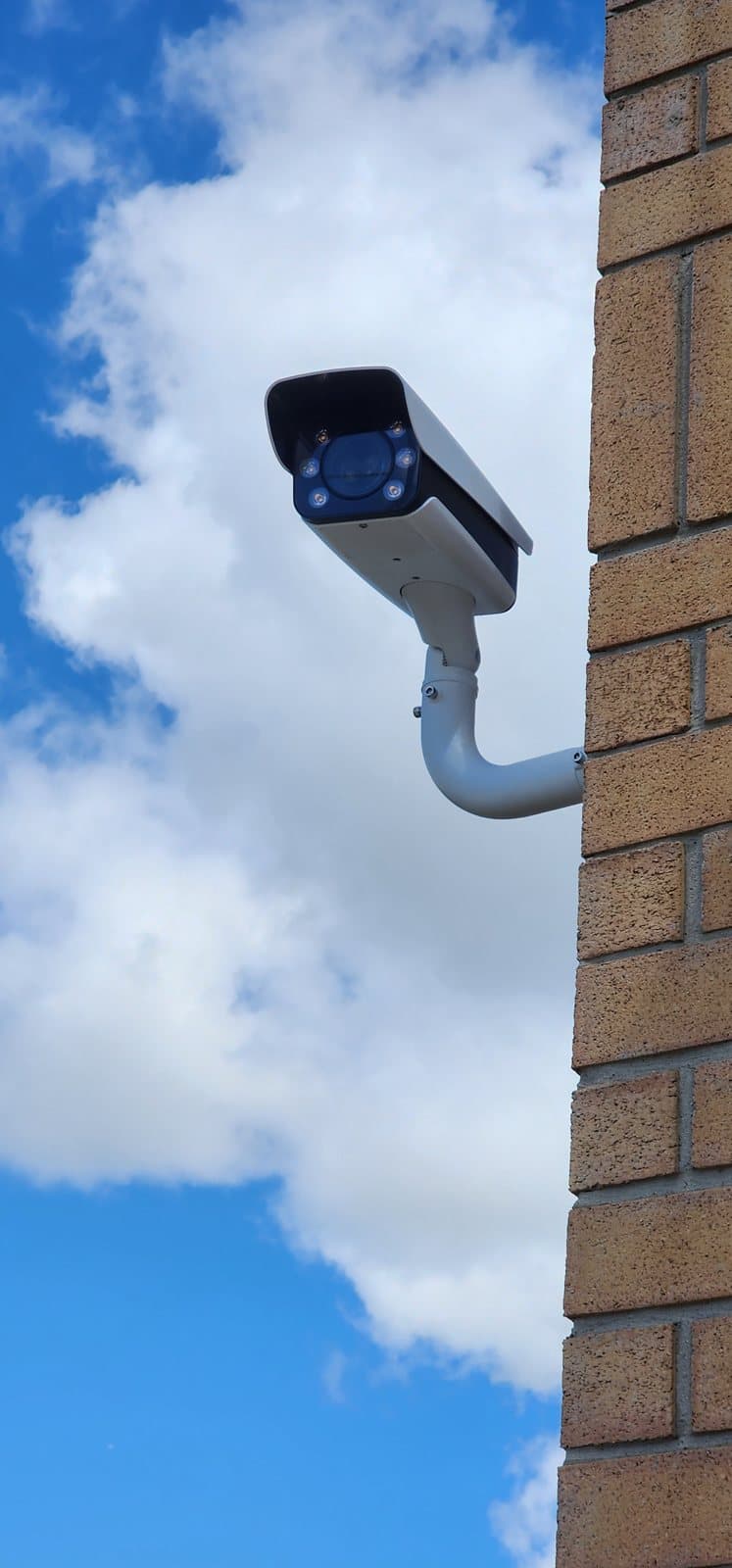
Bullet camera on an arm bracket, aimed along the wall 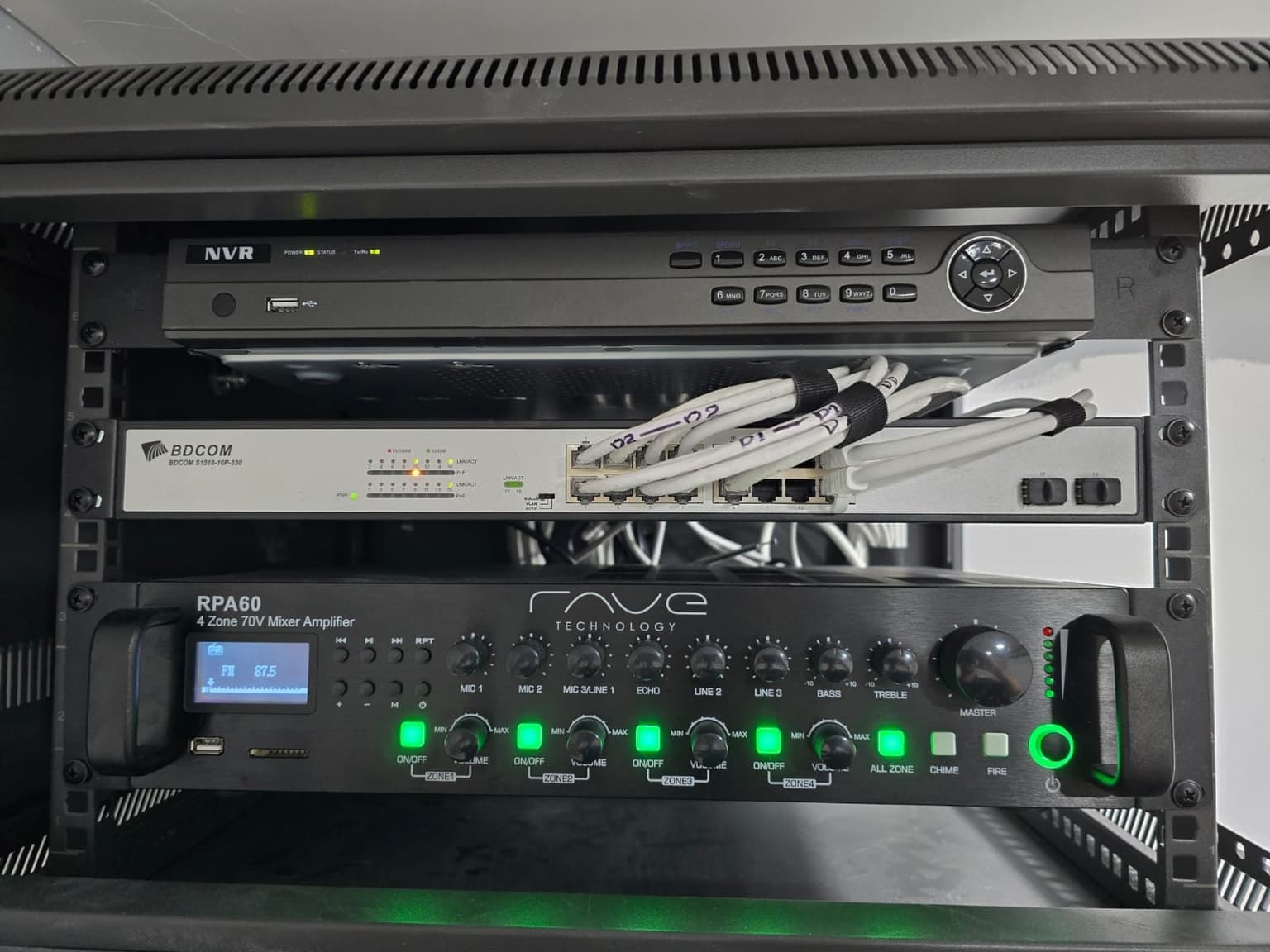
NVR recorder installed in a rack 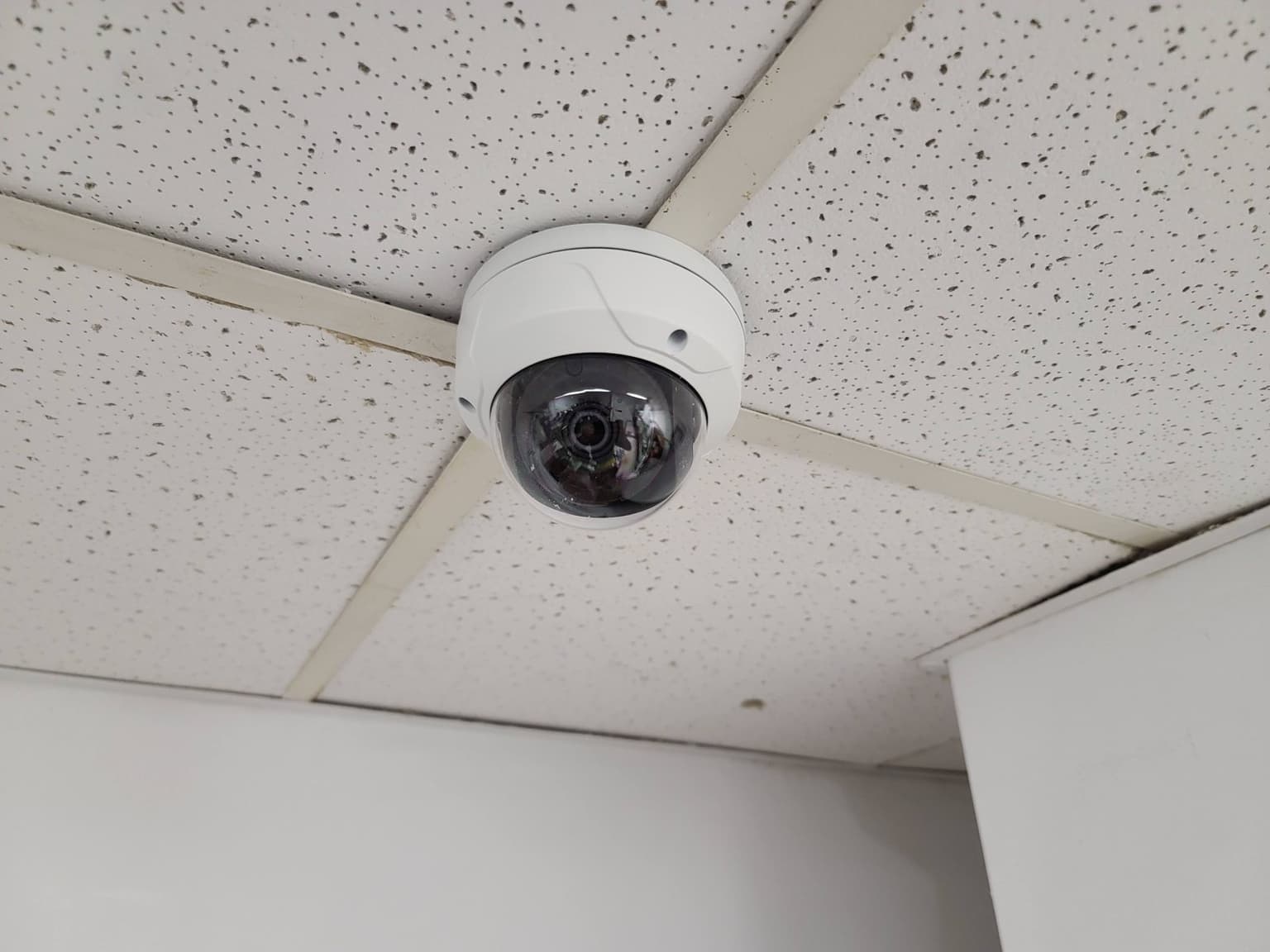
Dome camera on a drop ceiling grid
CCTV questions
Don't see yours? Call or text 647-797-8315.
What is the difference between CCTV and security cameras?
Most people use the terms interchangeably. CCTV originally meant analog cameras recording to a closed local system. Today we usually install IP or analog HD cameras that record to an on-site NVR or DVR, which serves the same purpose with much better image quality.
Can you reuse the coax from my old CCTV system?
Sometimes. If the existing coax is in good condition and reaches the right locations, an analog HD or hybrid recorder may reuse it. If the cable is damaged, poorly routed, or the site needs IP features, new network cable is usually the better choice. We test and inspect before recommending either option.
How far can a CCTV camera be from the recorder?
For IP cameras over copper network cable, the standard channel limit is 100 metres. Longer distances need a switch partway along the run, an extender, or fibre. We measure the route during the site visit and plan the network around it.
Can I watch my CCTV cameras on my phone?
Yes, for supported systems. We set up owner-controlled access and demonstrate live view, playback, and export. The owner keeps the administrator credentials and decides who else gets access.
Do CCTV systems need a monthly fee?
Not necessarily. A local NVR or DVR records on site without a required monthly cloud plan. Optional cloud storage or monitoring services carry their own recurring costs if you choose them.
Ready for a price?
Call, text, or send the form. We reply within a few hours.